
Introduction: The Problem With Chasing Skinny
Walk into any gym, scroll through any fitness account on Instagram, or flip through a magazine, and you will almost certainly encounter the same cultural message: thin is healthy. The number on the scale, the size on the label, the silhouette in the mirror — these are the metrics our culture has long used to judge health and fitness. But what if that framework is not just incomplete, it is actively misleading you about your wellbeing?
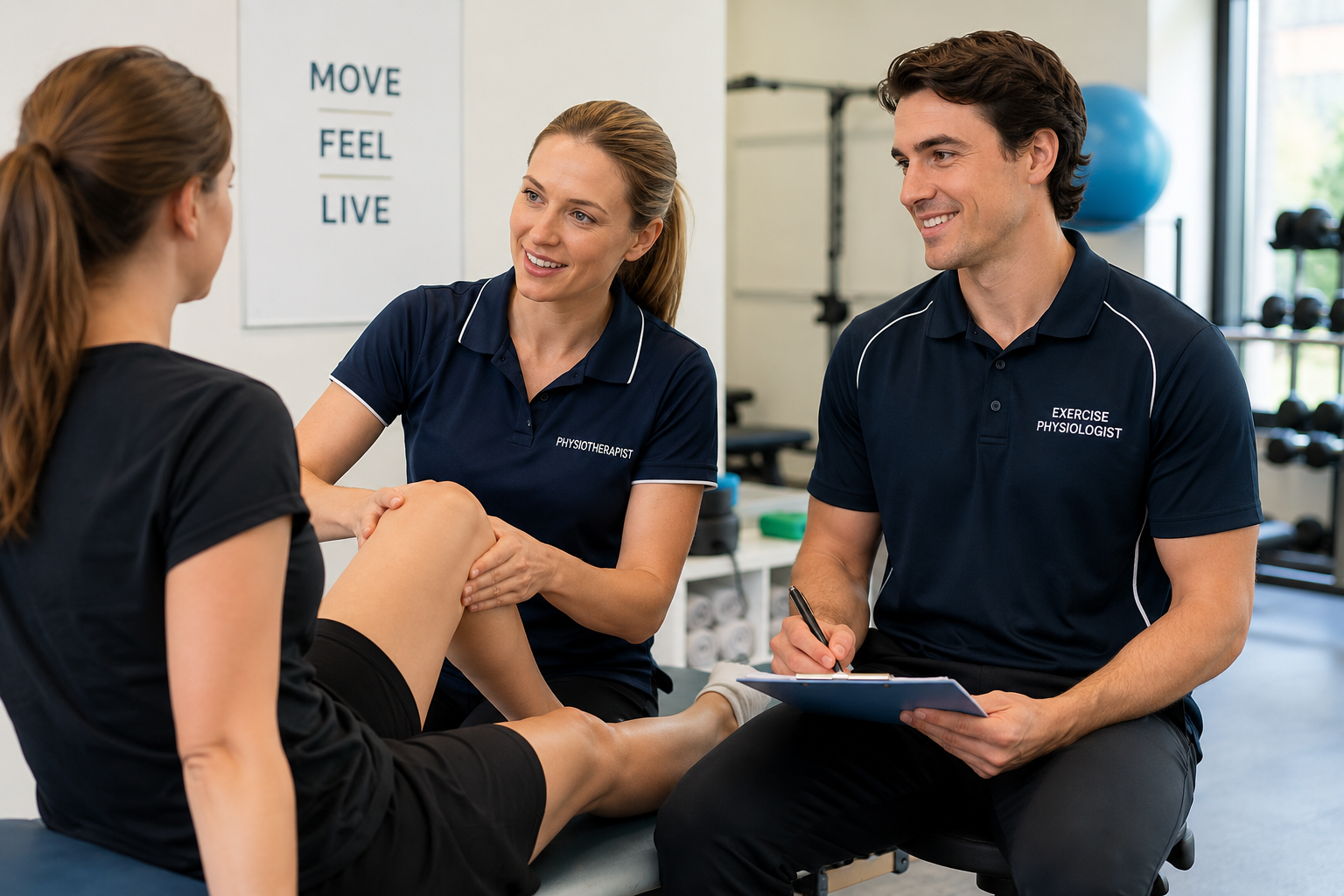
At MBXphys, our accredited exercise physiologists work daily with clients who are frustrated — not because they can’t lose weight, but because despite looking a certain way, they still feel unwell. They’re fatigued, their joints ache, they struggle up stairs, and their blood markers tell a worrying story. They are, in the words of researchers, ‘skinny fat.’ And the science is unambiguous: this is a health crisis hiding in plain sight.
This post digs into what the research actually tells us about strength versus leanness, why muscle mass is one of the most important markers of long-term health you’re probably ignoring, and what you can do about it — regardless of what the scale says.
What Does ‘Skinny Fat’ Actually Mean?
The term ‘skinny fat’ — clinically referred to as Normal Weight Obesity (NWO) or Metabolically Obese Normal Weight (MONW) — describes a person who has a normal or low body mass index (BMI) but carries an excess proportion of body fat relative to lean muscle mass. In short: the scale says you’re fine, but your body composition tells a very different story.
This distinction matters enormously because BMI — the tool most commonly used by doctors, insurers, and health guidelines — only measures height versus weight. It is completely blind to what that weight is made up of. Two people can weigh exactly the same at the same height: one could be a competitive athlete with 15% body fat and the other could have 35% body fat and virtually no muscle. BMI treats them identically.
A landmark study published in Cell Metabolism found that people with a normal BMI who were metabolically unhealthy — a group that accounts for roughly 20% of the normal-weight adult population — had more than a three-fold increased risk of all-cause mortality and cardiovascular events compared to their metabolically healthy, normal-weight counterparts. Being thin is not a get-out-of-jail-free card. It never was.
“Persons with a normal BMI but high body fat percentage carry a 3x greater risk of cardiovascular events and all-cause mortality than metabolically healthy normal-weight individuals.” — Stefan et al., Cell Metabolism
A more recent 2025 study published in Frontiers in Medicine reinforced this, finding that Normal Weight Obesity is strongly associated with systemic inflammation — a major driver of chronic disease — independent of BMI. The authors noted that approximately 30 million Americans have elevated body fat percentage despite a normal BMI, and that lower lean body mass relative to body fat is increasingly recognised as a critical contributor to cardiometabolic risk, more so than obesity itself.
The take-home message: if you are only tracking your weight or BMI, you are missing the most important part of the health picture.
Muscle Strength as a Predictor of Survival
If being skinny doesn’t protect you, what does? The answer is increasingly clear in the scientific literature: muscle strength. Not just muscle mass — though that matters too — but the functional capacity of your muscles to generate force. And the research linking strength to longevity is, frankly, stunning.
The Mortality Connection
A major systematic review and meta-analysis published in Archives of Physical Medicine and Rehabilitation analysed data from approximately two million men and women and found that higher levels of both upper- and lower-body muscular strength are associated with a significantly lower risk of all-cause mortality, regardless of age or follow-up period. This was not a modest association — it was consistent, robust, and held across populations.
The landmark Health, Aging and Body Composition (Health ABC) Study, published in the Journals of Gerontology, delivered a finding that turned heads in the medical community: muscle strength, not muscle mass, was the key predictor of mortality. Low muscle mass alone did not explain the mortality risk. It was the functional strength of the muscle — what it could actually do — that mattered most for survival outcomes. In other words, having big muscles that don’t function well is not enough. You need strong, capable, working muscle.
A 2024 prospective cohort study published in the Journal of Cachexia, Sarcopenia and Muscle followed adults across 28 countries and found that muscle strength was strongly and independently associated with reduced all-cause mortality in the oldest old — even after controlling for BMI, smoking, education, and self-perceived health. This is a global finding, not a Western outlier.
The science is clear: being strong is one of the most powerful predictors of how long — and how well — you will live.
A further PMC study using NHANES data — a nationally representative sample of over 4,000 Americans aged 50 and over — found that low muscle strength was independently associated with elevated all-cause mortality risk, regardless of muscle mass. Even when researchers controlled for metabolic syndrome, sedentary time, and leisure-time physical activity, the relationship held. Strength is not just a fitness metric — it is a health metric.
What About Muscle-Strengthening Activity Itself?
Beyond strength as a predictor, resistance training as a behaviour has its own mortality data. A large cohort study of older adults published in PMC found that engaging in any amount of weight training was associated with a 6% lower risk of all-cause mortality, an 8% lower risk of cardiovascular disease mortality, and a 5% lower risk of cancer mortality, compared to those who did none. Notably, women saw even greater risk reductions than men — 12% versus 3% for all-cause mortality.
A CDC-published study of a large US cohort similarly found that engaging in moderate amounts of muscle-strengthening activity was associated with lower all-cause mortality risk, independent of aerobic exercise levels. You don’t have to choose between weights and cardio — but if you are only doing one of them, you are leaving serious health benefits on the table.
Why Muscle Is So Much More Than Just Strength
Most people think of muscle as something you build for performance or aesthetics. But emerging science has fundamentally changed how we understand skeletal muscle. It is now classified as an endocrine organ — meaning it communicates with the rest of your body through chemical signals. And that communication may be one of the most important mechanisms for health protection we have discovered.
Your Muscle Is a Medicine Cabinet: Myokines
When you contract your muscles during resistance exercise, they release proteins called myokines — cytokines produced and secreted by muscle fibres. These myokines act on other organs in the body through autocrine, paracrine, and endocrine pathways, influencing everything from inflammation and immune function to cancer suppression, bone health, brain function, and metabolic regulation.
A 2022 narrative review in PMC outlined key myokines released during resistance training, including:
- Irisin — promotes the ‘browning’ of white fat tissue, activates fat-burning thermogenesis, improves glucose and lipid metabolism, and reduces insulin resistance
- IL-6 — promotes glucose transporter 4 expression in skeletal muscles, increasing insulin sensitivity and lowering plasma glucose for up to 24 hours post-exercise
- IL-15 — regulates muscle mass through anabolic effects; also reduces fat cell proliferation and promotes apoptosis in fat cells
- SPARC — augments fatty acid oxidation and glucose uptake; stimulates insulin sensitivity
- BDNF — brain-derived neurotrophic factor; supports cognitive health, mood regulation, and neuroplasticity
A 2024 systematic review and meta-analysis published in The FASEB Journal confirmed that acute resistance exercise produces a significant moderate positive effect on circulating levels of IL-6 and IL-1ra, which mediate anti-inflammatory and immunoregulatory processes. In other words, every time you lift weights, you are triggering a cascade of signals that help your body fight inflammation, manage blood sugar, burn fat, and protect organs — effects that no pill can replicate.
More than 600 myokines have been identified to date. Skeletal muscle may be the most powerful endocrine organ in your body — and resistance training is how you activate it.
Bone Health: The Overlooked Benefit
One of the most important — and most underappreciated — benefits of building and maintaining muscle is its direct relationship to bone health. Muscle and bone are deeply interconnected both mechanically and biochemically.
A systematic review published in Sports Medicine examined progressive resistance training in older adults and found that muscle contractions stimulate bone formation through both mechanical loading and the release of bone-influencing myokines such as insulin-like growth factor-1 (IGF-1) and interleukin-6. This means that resistance training strengthens both your muscles and your bones simultaneously.
A meta-analysis published in Healthcare (MDPI) found that resistance training protocols — typically three sessions per week at 70–90% of one-repetition maximum — produced a positive effect on bone mineral density at the hip (0.64%) and spine (0.62%) in older adults. While these numbers may seem modest, they represent a meaningful preventive buffer against the bone frailty that leads to fractures, hospitalisation, and loss of independence.
For those who think being small-framed or thin protects their bones — the opposite is often true. Without sufficient muscle mass applying mechanical stimulus to bone, bone density suffers. Thinness and frailty often go hand in hand, and both increase fracture risk dramatically.
The ‘Skinny Fat’ Trap: Why Cardio Alone Isn’t the Answer
Australia has a culture of cardio. We run, we swim, we cycle, we walk. And cardiovascular exercise is genuinely excellent for health — it reduces heart disease risk, improves mood, and supports metabolic function. We would never tell you to stop. But if cardio is your only tool, you are missing a critical component of health.
Here is what often happens with a ‘cardio only’ approach to fitness:
- Caloric restriction combined with cardio causes weight loss — but that weight loss includes muscle, not just fat
- Muscle loss slows metabolic rate, making it harder to maintain weight loss over time
- Reduced muscle mass lowers insulin sensitivity, increasing diabetes risk
- Bone density may decline without resistance-based mechanical stimulation
- Functional strength diminishes, increasing fall and injury risk
- The myokine cascade — with all its systemic health benefits — is far less robustly activated by cardio alone
This is the ‘skinny fat’ trap: someone who eats very little and does lots of steady-state cardio may look thin and feel they are ‘healthy,’ but beneath the surface they may have poor body composition, low bone density, metabolic dysfunction, elevated inflammatory markers, and a body that is metabolically fragile.
Weight on the scale is not the problem. The problem is what that weight is made of.
You can’t ‘out-cardio’ poor muscle mass. Building and maintaining muscle is not optional — it is a fundamental requirement of long-term health.
Strong Doesn’t Mean Bulky: The Fear That Holds People Back
At MBXphys, one of the most common concerns we hear — especially from women — is the fear of ‘getting too bulky’ from resistance training. This fear is one of the most persistent myths in fitness, and it’s directly harming people’s health by keeping them away from one of the most powerful health interventions available.
Here is the physiological reality: building significant muscle mass requires very specific conditions — high training volumes, substantial caloric surplus, and often, years of dedicated effort. The vast majority of people who begin a resistance training program will not become ‘bulky.’ They will become leaner, stronger, more capable, and healthier.
What resistance training does — particularly at the dosages recommended by exercise physiologists (two to four sessions per week, targeting major muscle groups) — is:
- Increase lean muscle mass and reduce relative body fat percentage
- Improve resting metabolic rate — meaning you burn more calories at rest
- Enhance insulin sensitivity and blood glucose regulation
- Improve posture, joint stability, and movement quality
- Reduce chronic pain, particularly low back pain and osteoarthritic knee pain
- Support psychological wellbeing and reduce symptoms of depression and anxiety
- Reduce risk of chronic disease across the board
The goal is not to look like a bodybuilder. The goal is to build enough muscle to function optimally, resist disease, and maintain independence and quality of life for decades.
What Does an Optimal Body Composition Look Like?
We have established that the scale is a poor measure of health. So what should you be measuring? Body composition — the ratio of muscle to fat — is far more informative. And within that, functional muscle strength is perhaps the most clinically meaningful marker.
At MBXphys, our exercise physiologists use a range of tools to assess body composition and function, including:
- Handgrip dynamometry — grip strength is one of the most validated predictors of overall health and mortality risk
- Functional movement assessments — how well you squat, hinge, push, pull, and carry
- Body composition analysis — tracking fat mass versus lean mass, not just total weight
- Waist-to-hip ratio — a much stronger predictor of cardiometabolic risk than BMI alone
- Cardiovascular fitness testing — VO2 estimates and step tests
The research is clear that even modest improvements in muscle strength and body composition produce meaningful health benefits. You don’t need to achieve a particular aesthetic. You need to become functionally stronger and metabolically healthier.
For context: the NHANES study found that muscle strength was independently associated with mortality outcomes regardless of BMI, sedentary time, or leisure-time physical activity. You don’t need to run marathons. You need strong, functioning muscles.
How to Build Strength Without Losing Your Mind (Or Your Life)
The science may be clear, but the practical application is where most people get lost. Here is what the evidence — and our clinical experience at MBXphys — tells us about effective strength training:
Frequency and Volume
Australian Physical Activity Guidelines recommend muscle-strengthening activity at least two days per week. The research supports starting here, with three to four sessions per week being optimal for most adults seeking meaningful muscle and strength gains. Each session should target all major muscle groups: legs, back, chest, shoulders, arms, and core.
Progressive Overload
The single most important principle of resistance training is progressive overload — gradually increasing the challenge to your muscles over time. This can mean adding weight, increasing reps, adding sets, or reducing rest periods. Without progression, adaptation stops. This is precisely why individualised programming from an accredited exercise physiologist is so valuable — progression needs to be safe, appropriate, and structured.
Intensity
The meta-analyses on bone health suggest working at 70–90% of your one-repetition maximum for bone density benefits. For general health and strength gains, working at a level where the last two or three reps of each set feel genuinely challenging is the key principle. You should feel like you could not easily do five more.
Protein Intake
Muscle is built from protein. Current evidence-based recommendations for adults seeking to build or maintain muscle suggest a daily protein intake of 1.6–2.2 grams per kilogram of body weight. For a 70kg adult, that is roughly 112–154g of protein per day — significantly more than most Australians currently consume. Lean meats, fish, eggs, dairy, legumes, and quality protein supplements can help you hit these targets.
Consistency Over Intensity
Perhaps the most important factor of all: consistency. The greatest exercise program is the one you actually do. Sustainable, enjoyable resistance training performed over months and years produces transformative results. The overnight approach — extreme programs, extreme diets, extreme restriction — almost universally fails and often causes harm. Sustainable change is the only change that lasts.
The MBXphys Approach: Exercise as Medicine
At MBXphys, we don’t design programs based on how clients want to look. We design programs based on how they want to live. Our accredited exercise physiologists — registered under Medicare, DVA, SIRA, and Private Health — take a clinical, evidence-based approach to exercise prescription that considers your full health picture: your medical history, your movement assessment, your goals, your lifestyle, and your values.
Whether you’re managing a chronic condition like diabetes, osteoporosis, or chronic pain; recovering from an injury through a WorkCover program; or simply wanting to invest in your long-term health and function, our team builds programs that are:
- Evidence-based — grounded in current peer-reviewed research
- Individualised — tailored to your specific body, history, and goals
- Progressive — structured to create adaptation safely over time
- Sustainable — designed to build habits that last, not quick fixes that don’t
- Holistic — addressing not just fitness but lifestyle, nutrition principles, and wellbeing
Our locations in Rydalmere and Eastwood serve the Greater Western Sydney community, and we believe that access to expert, evidence-based exercise physiology should be available to everyone. That is why we work with Medicare, DVA, and private health funds to make our services as accessible as possible.
Key Takeaways: What You Should Do Next
If you have read this far, here is what we want you to take away:
- Stop using BMI or weight as your primary health metric. They are deeply flawed tools that miss the most important information: your body composition and muscle strength.
- Normal weight does not mean healthy. Up to 20% of normal-weight adults are metabolically unhealthy, carrying excess fat and insufficient muscle — a condition that triples their risk of cardiovascular events and death.
- Muscle strength is one of the strongest predictors of longevity we have. Across millions of participants and dozens of countries, the research is unambiguous.
- Skeletal muscle is an endocrine organ. The myokines it releases during resistance exercise protect your heart, brain, bones, immune system, and metabolic health in ways cardio alone cannot match.
- Resistance training will not make you bulky. But it will make you healthier, stronger, more metabolically resilient, and better prepared for everything life throws at you.
- Two to four sessions of resistance training per week, combined with adequate protein intake and consistency, is one of the most powerful health investments available to you at any age.
- Work with an accredited exercise physiologist. Not a personal trainer who programs aesthetics, not a YouTube algorithm, not a friend’s advice — a clinically trained professional who understands your body and your health.
References
1. Stefan, N., Häring, H.U., Hu, F.B., & Schulze, M.B. (2013). Metabolically healthy obesity: epidemiology, mechanisms, and clinical implications. Lancet Diabetes & Endocrinology, 1(2), 152–162.
2. García-Hermoso, A., Cavero-Redondo, I., Ramírez-Vélez, R., Ruiz, J.R., Ortega, F.B., Lee, D.C., & Martínez-Vizcaíno, V. (2018). Muscular Strength as a Predictor of All-Cause Mortality in an Apparently Healthy Population: A Systematic Review and Meta-Analysis of Data From Approximately 2 Million Men and Women. Archives of Physical Medicine and Rehabilitation, 99(10), 2100–2113.e5.
3. Newman, A.B., Kupelian, V., Visser, M., Simonsick, E.M., Goodpaster, B.H., Kritchevsky, S.B., et al. (2006). Strength, but not muscle mass, is associated with mortality in the Health, Aging and Body Composition Study cohort. The Journals of Gerontology Series A: Biological Sciences and Medical Sciences, 61(1), 72–77.
4. Liu, R.G., Orlando, F.A., Saguil, A.A., Jo, A., Smith, K.B., Miller, A.M., et al. (2025). More evidence of the health risks of normal weight obesity: the association with systemic inflammation. Frontiers in Medicine, 12, 1695935.
5. Patel, A.V., Hodge, J.M., Rees-Punia, E., Teras, L.R., Campbell, P.T., & Gapstur, S.M. (2020). Relationship Between Muscle-Strengthening Activity and Cause-Specific Mortality in a Large US Cohort. Preventing Chronic Disease, 17, 190408.
6. Ringleb, M., Mathes, S., Fonteneau, E., Buhmann, J., & Diel, P. (2024). Beyond muscles: Investigating immunoregulatory myokines in acute resistance exercise – A systematic review and meta-analysis. The FASEB Journal, 38, e23596.
7. Andersen, L.L., et al. (2024). Association of Muscle Strength With All-Cause Mortality in the Oldest Old: Prospective Cohort Study From 28 Countries. Journal of Cachexia, Sarcopenia and Muscle.
8. Zhao, R., Zhao, M., & Xu, Z. (2015). The effects of differing resistance training modes on the preservation of bone mineral density in postmenopausal women: a meta-analysis. Osteoporosis International, 26(5), 1605–1618.
9. Kemmler, W., Kohl, M., Freiberger, E., Sieber, C., & von Stengel, S. (2022). Progressive Resistance Training for Concomitant Increases in Muscle Strength and Bone Mineral Density in Older Adults: A Systematic Review with Meta-Analysis. Sports Medicine.
10. Liao, C.D., Chen, H.C., Huang, S.W., & Liou, T.H. (2022). The Role of Muscle Mass Gain Following Protein Supplementation Plus Exercise Therapy in Older Adults with Sarcopenia and Frailty Risks: A Systematic Review and Meta-Regression Analysis of Randomized Trials. Nutrients, 14(2), 357.
Ready to Build a Stronger, Healthier You?
The team at MBXphys are accredited exercise physiologists registered with Medicare, DVA, SIRA, and Private Health. We provide personalised, evidence-based exercise programs for chronic disease management, injury rehabilitation, and general health and performance.
Book your initial assessment today and let us build a program based on your body, your health, and your goals — not what the scale says.