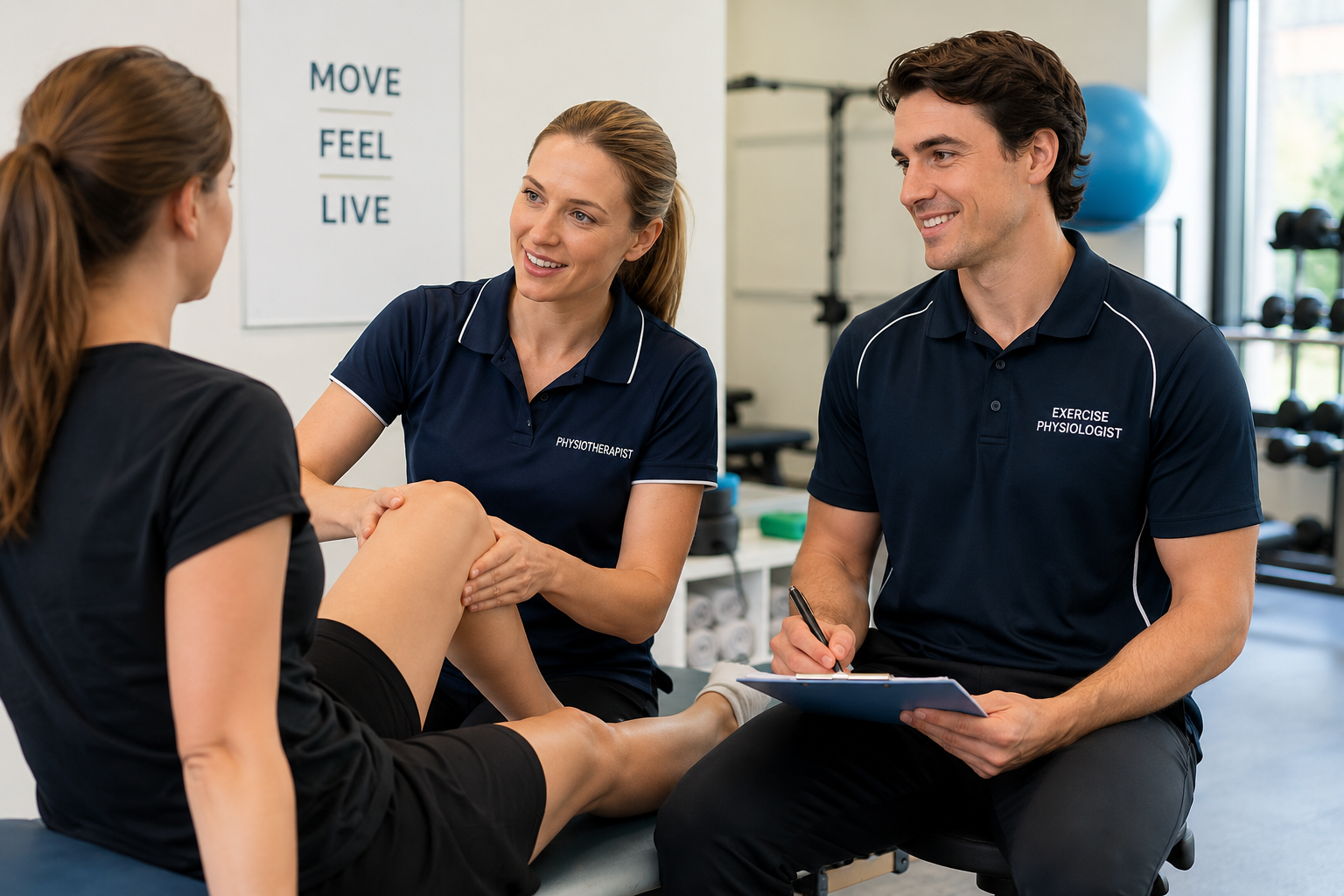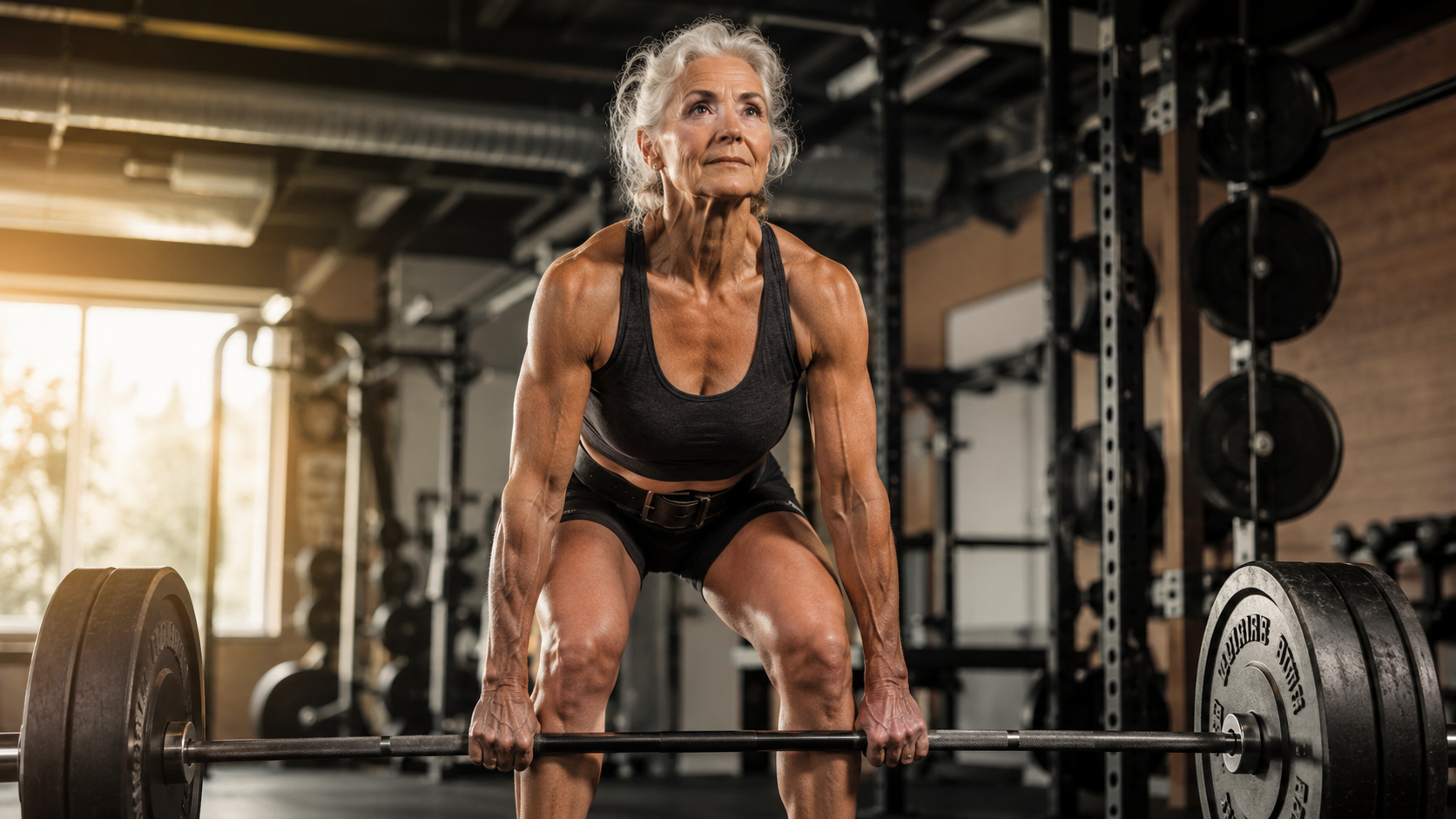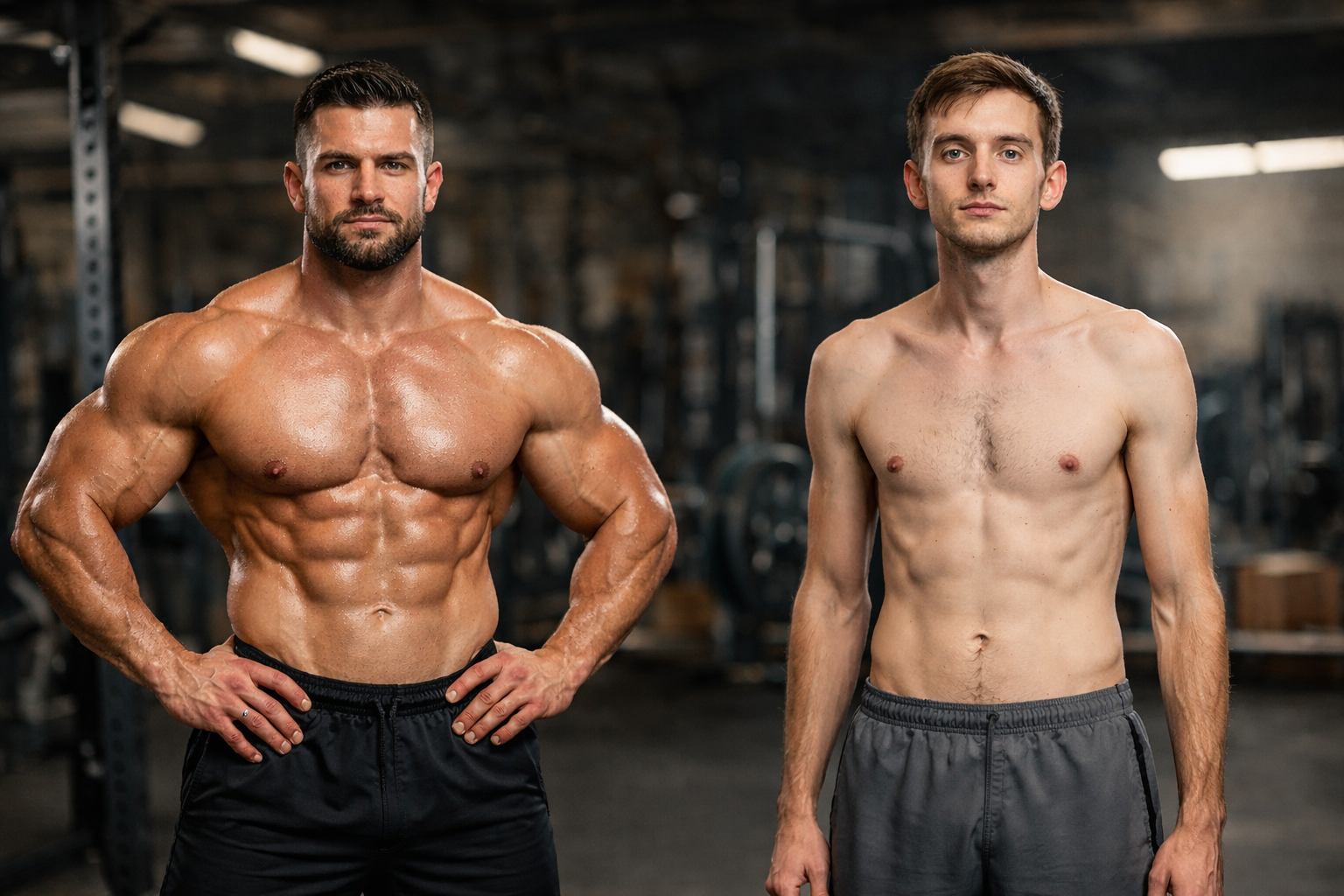
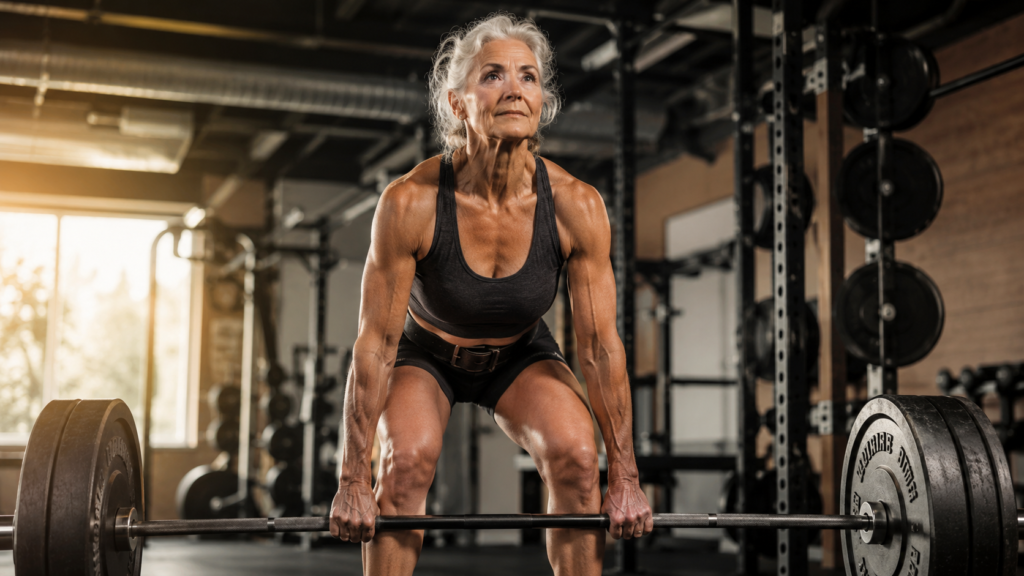
A 74-year-old walks into our clinic. Sharp, motivated, and two years into a program with a previous allied health practitioner. We ask about their training history. The answer? Three kilogram dumbbells. Seated. No barbell. No progression. Same session, week after week, for two years. That’s not exercise prescription. That’s babysitting — and older adults deserve better.
The instinct to go easy on elderly clients is understandable. Bodies age. Joints wear. Risk feels heightened. But the science tells a very different story to what’s being practised in many allied health settings across Australia. Older adults don’t just tolerate progressive resistance training — they need it, arguably more than any other population. And the evidence that most practitioners are significantly underloading their elderly clients has never been stronger.
This post breaks down exactly why that matters, what the research says about strength training and ageing, and why questions like ‘how are we loading bones without axial demand?’ aren’t just rhetorical — they’re clinically important.
The Problem: We’re Treating Old Bodies Like They’re Fragile
There’s a deeply embedded cultural narrative around ageing and exercise that goes something like this: as people get older, they need to be more careful, do less, move more gently, and avoid anything that might hurt them. This narrative has found its way into clinical practice, and the result is widespread underloading of older adults across gyms, physiotherapy clinics, and allied health settings.
The problem isn’t malicious. Practitioners genuinely believe they’re being conservative for a reason. But conservatism without evidence isn’t caution — it’s negligence with good intentions. When we seat a 74-year-old with three kilogram dumbbells and call it a strength program, we’ve misunderstood both the science of ageing and the science of exercise.
Clinical Reality: Three kilogram dumbbells aren’t keeping your elderly client safe. They’re keeping them weak.
The human body — regardless of age — responds to load. Muscle tissue grows when placed under sufficient mechanical stress. Bone density is maintained through axial and compressive forces. Neural adaptations that improve balance, coordination, and fall prevention occur in response to challenging movement. None of this changes at 70. The mechanisms are the same. What changes is the context — not the biology.
Sarcopenia: The Condition We’re Making Worse
Sarcopenia — the progressive, age-related loss of skeletal muscle mass and strength — is one of the most significant health challenges facing our ageing population. It’s not just about looking less muscular. Sarcopenia is directly linked to falls, fractures, hospitalisation, loss of independence, and all-cause mortality.
The numbers are confronting. Research estimates that sarcopenia affects up to 29% of community-dwelling older adults, with prevalence rising sharply after 70. A 2024 scoping review published in MDPI’s Life journal, which included 36 studies, confirmed that resistance training programs consistently reduce sarcopenia prevalence in older adults — while control groups remained the same or deteriorated.
Here’s the kicker: the physiological response to resistance training in older adults follows the same principles as in younger populations. The body responds to overload. Progressive resistance training triggers muscle protein synthesis, stimulates anabolic hormonal responses, and drives neural adaptations that improve strength and function. Seated bicep curls with a 3kg dumbbell provide insufficient stimulus for any of these responses. They’re not a warm-up for real training. They are, at the dose most elderly clients receive them, essentially therapeutic theatre.
Clinical Reality: Sarcopenia doesn’t care about your comfort zone. Underdosing exercise in older adults is a clinical error, not a safety measure.
The research is unambiguous on what actually works: progressive overload. Load that is sufficient to challenge the neuromuscular system. Compound, multi-joint movements. Exercises that place meaningful mechanical demand on the musculoskeletal system. A 2022 narrative review in Frontiers in Sports and Active Living put it clearly — no substantial differences exist in the physiological response to strength training between young and older adults. The principles are identical. The application needs to be appropriately individualised and supervised, not abandoned.
The Axial Loading Problem: Bones Need Demand
Let’s get specific about one of the most clinically important but routinely ignored issues in exercise prescription for older adults: axial loading.
Axial loading refers to forces applied along the long axis of the skeleton — the compressive, weight-bearing forces that bones experience during activities like standing, walking, squatting, and deadlifting. These forces are what stimulate osteogenesis — the formation of new bone tissue.
When we seat our elderly clients on a chair and hand them light dumbbells, we remove virtually all axial loading from the equation. The spine, hips, and femoral neck — the very sites where fractures are most catastrophic in older adults — receive no meaningful mechanical stimulus. We’re essentially asking bone tissue to maintain density without giving it a reason to.
The Real Question: How exactly are we loading bones without axial demand? We’re not — and that’s the problem.
The research on bone density and resistance training in older adults is instructive here. A systematic review and meta-analysis published in PMC found that resistance training protocols using moderate to heavy loads (50-80% of one repetition maximum), performed two to three times per week and including compound exercises like squats and deadlifts, demonstrated clinically relevant improvements in bone mineral density of the spine and hip — up to 3.8%.
Importantly, the same review found that aerobic training and other low-impact exercise forms, including cycling and swimming, have little or no effect on bone health. The specific mechanical stimulus of load-bearing, compressive exercise cannot be replicated by gentle movement. It has to be earned through appropriate loading.
A landmark randomised controlled trial — the LISE study — directly compared heavy resistance training, moderate intensity training, and a non-exercising control in 451 older adults at retirement age. Heavy resistance training provided the greatest short-term benefits on bone formation markers. The moderate intensity group showed less effect. The control group deteriorated, as expected.
None of this is surprising from an exercise physiology standpoint. Wolff’s Law — the principle that bone adapts to the forces placed upon it — has been understood for over a century. The problem isn’t knowledge. The problem is that clinical practice has failed to apply it.
Grip Strength as a Mirror of Systemic Health
One of the most compelling arguments for taking strength in older adults seriously is the relationship between grip strength and mortality. It sounds almost too simple to be true — how could how hard you squeeze a dynamometer tell us anything meaningful about how long you’ll live?
As it turns out, it can tell us quite a lot.
Grip strength is a proxy for overall systemic muscle strength. And decades of longitudinal research across millions of people in dozens of countries has consistently shown that higher grip strength is associated with significantly lower all-cause mortality, cardiovascular mortality, and cancer mortality.
A 2024 study in the Journal of Cachexia, Sarcopenia and Muscle — drawing on data from 28 countries — confirmed the association between muscle strength and all-cause mortality in the oldest old, a population that remains understudied. A separate study using NHANES 2011-2014 data found grip strength to be one of the best single predictors of all-cause mortality across adult populations. And a prospective cohort from the Newcastle 85+ Study found that not only did higher baseline grip strength predict lower mortality risk over a 9.6-year follow-up, but that increasing grip strength over time was associated with a 31% reduced risk of death — regardless of where participants started.
Research Finding: Grip strength increasing over time was associated with a 31% reduced risk of mortality in adults over 85. That’s not a passive outcome — it requires training.
The practical implication is profound. We can measure grip strength in clinical settings. It’s cheap, non-invasive, and highly predictive. And if grip strength is a mirror of systemic muscle health, then programs that fail to build or maintain grip strength — programs built around light dumbbells and seated movements — are failing to move the needle on the outcomes that matter most.
Falls, Function, and the Case for Heavy Compound Movements
Falls are the leading cause of injury-related hospitalisations in older Australians. Around one in three adults over 65 will fall in any given year. Of those falls, approximately one in ten results in a fracture. The hip fracture in particular carries devastating consequences — research consistently estimates that 20-30% of older adults who fracture a hip die within 12 months.
Given these stakes, fall prevention is not a secondary consideration in exercise programming for older adults. It’s arguably the primary one. And the evidence on what actually prevents falls points strongly toward resistance training — specifically, progressive resistance training that challenges balance, builds lower limb strength, and improves neuromuscular coordination.
A narrative review in the International Journal of Environmental Research and Public Health examined the evidence on resistance training for fall prevention in community-dwelling older adults. The conclusion was clear: muscle mass, muscle strength, bone density, and cartilage function all play significant roles in fall risk, and resistance training positively and significantly affects all of them.
This is where compound, multi-joint movements become clinically essential. Exercises like the deadlift, squat, Romanian deadlift, and trap bar deadlift don’t just build strength in isolation — they challenge the entire kinetic chain, require coordination across multiple joints, impose axial loading through the spine and hips, and replicate the movement patterns of real life. Getting up off the floor. Picking something up. Carrying groceries. Navigating stairs.
A 2023 narrative review in Bone journal, examining the specificity and overload principles in fall and fracture prevention, concluded that resistance training can improve muscle mass, strength, and a variety of physical performance measures in older adults — and emphasised that the specificity and progressive overload principles must be applied to achieve meaningful results. Low-load, non-progressive training simply doesn’t meet the bar.
What About Safety?
The question practitioners most often ask at this point is: but is it safe? And it’s a fair question. The answer, based on the available evidence, is yes — when appropriately prescribed and supervised.
A systematic review of long-term exercise interventions in older adults published in Sports Medicine found that well-designed resistance training programs are safe for older adults, including those with multiple comorbidities. The key phrases here are well-designed and supervised. The risk in exercise prescription for older adults is not in loading appropriately — it’s in loading inappropriately without qualified oversight.
This is precisely where Exercise Physiologists are trained to operate. AEPs have the clinical skills to assess, screen, and progressively load older adults — including those with osteoporosis, arthritis, cardiovascular disease, and other comorbidities. We don’t avoid load. We calibrate it.
The Evidence Base for Heavy Resistance Training in Older Adults
The current evidence base is not subtle. Multiple systematic reviews, meta-analyses, and randomised controlled trials have now established that:
• Progressive resistance training is the most effective intervention for reducing sarcopenia prevalence in older adults
• Heavier loads (70-85% of 1RM) are associated with superior gains in muscle strength and bone density compared to moderate or light loads
• Compound, axially-loaded exercises produce the greatest skeletal benefits in older populations
• Heavy resistance training is safe when appropriately supervised in both frail and non-frail older adults
• Grip strength — a proxy for systemic muscle health — is one of the strongest predictors of all-cause mortality across all age groups
• Resistance training reduces fall risk through improvements in strength, balance, and neuromuscular coordination
A 2024 paper in Archives of Gerontology and Geriatrics demonstrated that progressive strength training can reverse sarcopenia stage in middle-aged and older adults, regardless of genetic profile. The intervention was not gentle. It was progressive, structured, and meaningfully challenging.
A review in Frontiers in Sports and Active Living emphasised the necessity of progressive overload — stating plainly that positive adaptation occurs only if the actual training load overcomes the habitual level. It also highlighted that self-administered, non-progressive resistance training using elastic bands and light weights produced negligible results despite good compliance. Compliance without sufficient load is not a program. It’s motion.
What This Looks Like in Practice at MBXphys
The 74-year-old client we mentioned at the start of this post is now deadlifting. Not with a broomstick. Not with bands. With a barbell, appropriately loaded, under direct supervision.
They told us last week it’s the strongest they’ve felt in a decade.
That didn’t happen by being careful with them. It happened by being rigorous — by screening thoroughly, programming progressively, coaching technique meticulously, and trusting the evidence over the instinct to go easy.
Here’s what appropriate strength programming for an older adult looks like at MBXphys:
• Comprehensive initial assessment — medical history, movement screening, functional testing, and goal-setting
• Progressive resistance training using compound movements — deadlifts, squats, presses, rows — scaled appropriately to the individual
• Axial loading through the spine and hips in every session — not optional, not an add-on
• Load that is genuinely challenging — working between 65-85% of 1RM for most exercises, progressed weekly
• Specific attention to grip strength, balance, and gait — the functional markers that predict long-term outcomes
• Ongoing monitoring and communication with GPs and other treating practitioners
This is not a one-size-fits-all approach. An 80-year-old with severe osteoporosis and a recent vertebral fracture requires different programming to a 74-year-old with well-controlled hypertension and no musculoskeletal history. That’s the point of clinical expertise — it’s not the avoidance of load, it’s the intelligent application of it.
A Word to Referring Practitioners
If you’re a GP, specialist, or allied health practitioner who refers elderly patients to exercise programs — this matters to you too.
When you refer an older patient for exercise, the quality of that prescription directly affects clinical outcomes. A program that underloads your patient will not reduce their fall risk, will not reverse sarcopenia, will not build bone density, and will not improve grip strength. It will maintain the status quo at best, and allow continued deterioration at worst.
Accredited Exercise Physiologists are specifically trained to prescribe and supervise therapeutic exercise for complex and older populations. When you refer to an AEP, you should expect evidence-based, progressive programming — not a supervised stretching session.
If the exercise program your patient is attending doesn’t include meaningful resistance training with progressive load, it’s worth asking why.
The Bottom Line
Older adults are not fragile. They are adaptable — and they deserve exercise programs that treat them accordingly.
The evidence is clear. Progressive resistance training, with appropriate load and compound movements, is one of the most powerful interventions available for healthy ageing. It reduces sarcopenia. It builds bone density through axial loading. It cuts fall risk. It improves grip strength — and grip strength predicts how long people live.
Three kilogram dumbbells, seated, with no progression, are not a strength program for a 74-year-old. They’re a missed opportunity — and in the context of an ageing population dealing with sarcopenia, falls, and loss of independence, a missed opportunity has real clinical consequences.
Stop being afraid of load. Your elderly clients deserve better.
Work With MBXphys: If you’d like to discuss appropriate exercise prescription for an older adult patient or client, our team at MBXphys is available for consultations. Visit mbxphys.com.au or call us directly.
References
1. MDPI Life Journal (2024). Effects of Resistance Training on Sarcopenia Risk Among Healthy Older Adults: A Scoping Review of Physiological Mechanisms. Life, 15(5), 688. https://www.mdpi.com/2075-1729/15/5/688
2. Andersen et al. (2024). Association of Muscle Strength With All-Cause Mortality in the Oldest Old: Prospective Cohort Study From 28 Countries. Journal of Cachexia, Sarcopenia and Muscle. https://doi.org/10.1002/jcsm.13619
3. PMC (2022). The Effect of Resistance Training on Bone Mineral Density in Older Adults: A Systematic Review and Meta-Analysis. PMC9222380. https://pmc.ncbi.nlm.nih.gov/articles/PMC9222380
4. ScienceDirect (2025). Heavy resistance training provides short-term benefits on bone formation in well-functioning older adults. Bone. https://doi.org/10.1016/j.bone.2025.001
5. Frontiers in Sports and Active Living (2022). Strength Training in Elderly: An Useful Tool Against Sarcopenia. https://doi.org/10.3389/fspor.2022.950949
6. da Silva et al. (2024). Progressive strength training can reverse sarcopenia stage in middle-aged and older adults regardless of their genetic profile. Archives of Gerontology and Geriatrics, 117, 105182. https://doi.org/10.1016/j.archger.2023.105182
7. Giangregorio et al. (2023). Using the specificity and overload principles to prevent sarcopenia, falls and fractures with exercise. Bone, 166, 116573. https://doi.org/10.1016/j.bone.2022.116573
8. Chai et al. (2024). Comparison of grip strength measurements for predicting all-cause mortality among adults aged 20+ years from the NHANES 2011–2014. Scientific Reports, 14, 29245. https://doi.org/10.1038/s41598-024-80487-y
9. Landi et al. (2022). Newcastle 85+ Study: Initial level and rate of change in grip strength predict all-cause mortality in very old adults. PMC5860048.
10. International Journal of Environmental Research and Public Health (2022). A Review on Aging, Sarcopenia, Falls, and Resistance Training in Community-Dwelling Older Adults. PMC8775372.
MBXphys | Exercise Physiology | mbxphys.com.au | Internal Use